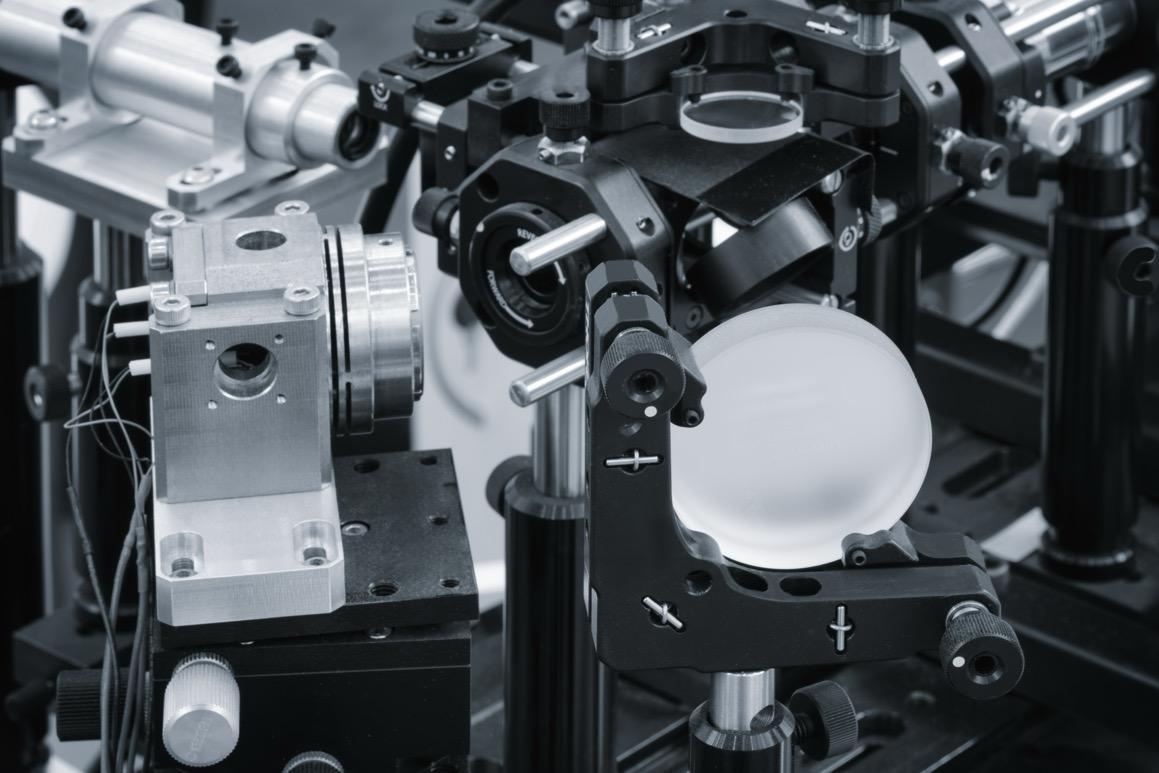

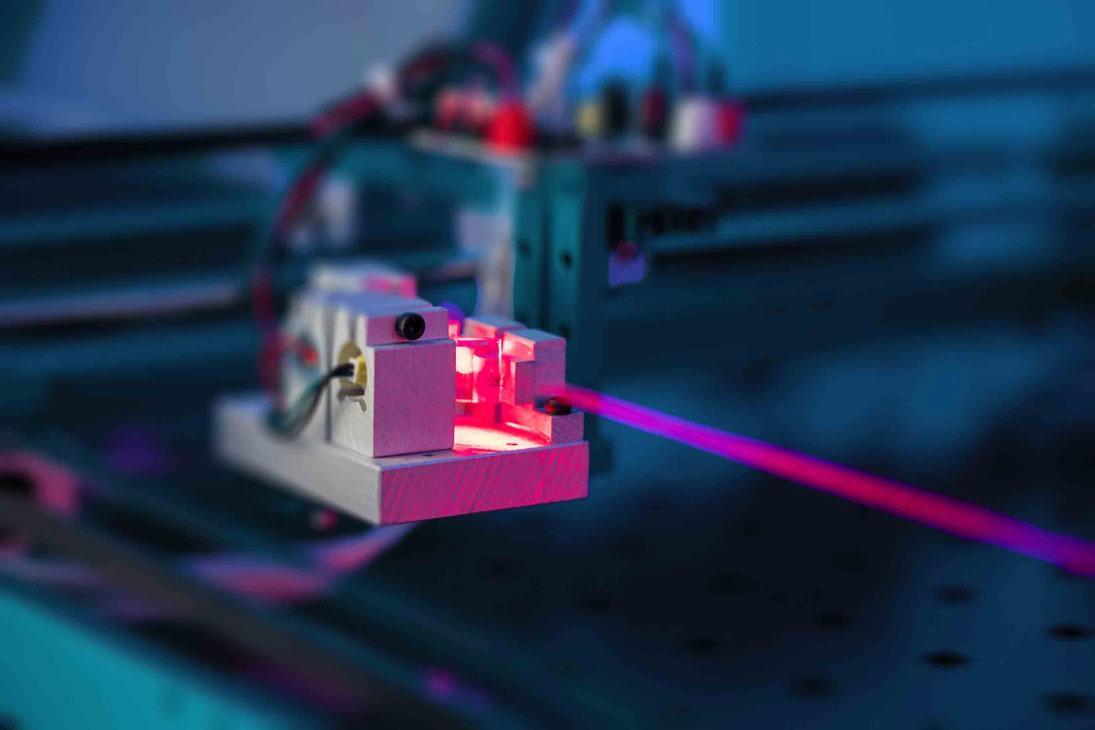
OEM laser module: Precision Light Sources for Raman Spectroscopy and System Integration

An OEM laser module serves as the technological heart for many industrial and scientific applications by combining a laser diode, driver electronics, and precise optics into a compact architecture. Modern analytical instrumentation from RGB Lasersystems requires these solutions to fit existing hardware without compromising optical performance. These systems offer defined wavelengths and reproducible output power, providing the necessary flexibility for demanding measurement tasks in analytical sensing and complex industrial automation.
Technological foundations of an integrated OEM laser module
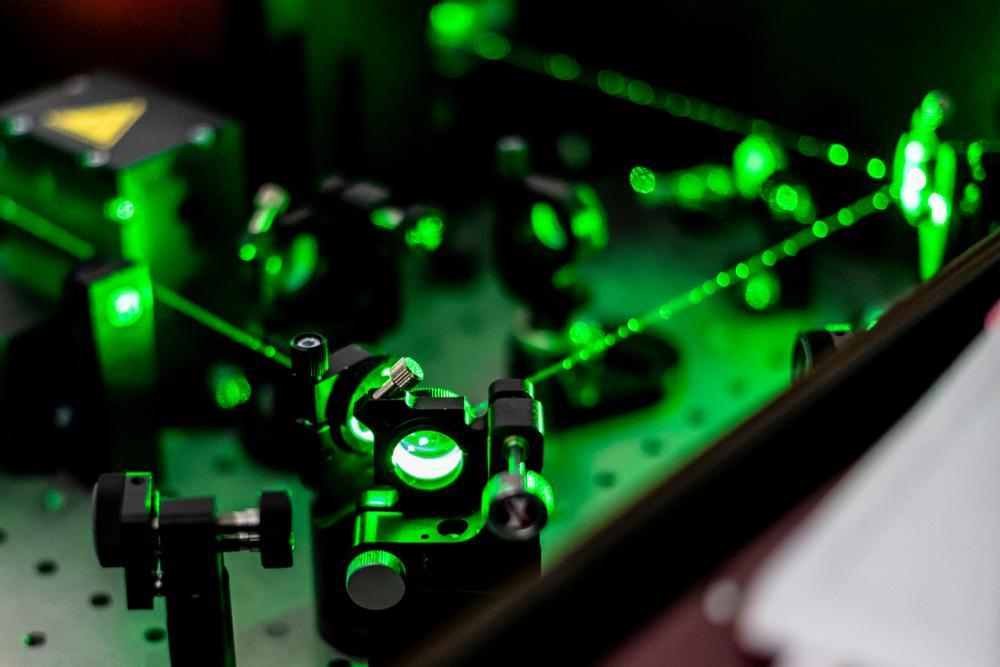
The physical operation of an OEM laser module relies on stimulated emission within a semiconductor medium like gallium arsenide, which determines the wavelength through its specific bandgap. Within the module, the diode efficiently converts electrical energy into coherent light while the architecture ensures that heat is dissipated from the chip. Rising temperatures could otherwise lower efficiency or shift the wavelength, making high quality crystal structures and thermal bonding essential for maintaining stable performance.
Core components of a modern OEM laser module
A functional OEM laser module consists of a laser diode, collimating optics, driver electronics, and thermal management housed in a stable enclosure. Electronic control is handled via digital interfaces like USB, enabling real time power modulation and easy integration into automated processes. This versatility allows users to adjust light intensity to match dynamic industrial environments while protecting the sensitive diode from voltage spikes through integrated safety features and power monitoring.
The OEM laser module in Raman spectroscopy
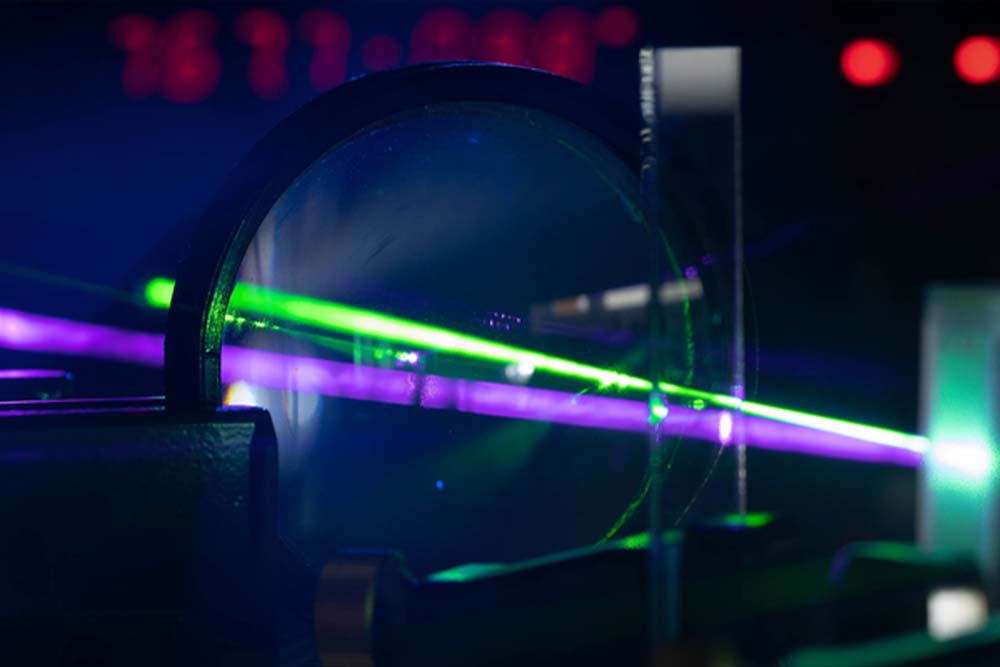
Raman spectroscopy requires an extremely stable and low noise OEM laser module to identify molecular vibrations through inelastic light scattering. A 785 nm laser module is commonly used because it offers an optimal balance between scattering efficiency and background noise. Specialized modules for this range feature an ultra-narrow spectral linewidth, allowing for the resolution of fine spectral features. RGB Lasersystems provides these optimized Wavelock systems to ensure the highest precision for these sensitive measurements.
Selecting the optimal excitation wavelength
The choice of wavelength directly influences the sensitivity of the entire spectroscopic system, as shorter wavelengths like 532 nm generate stronger signals but often cause fluorescence. An OEM laser module operating at 830 nm or 1064 nm can avoid these issues, although this shift requires NIR-optimized optics. System developers must align the light source precisely with the target substances to achieve usable data while avoiding potential sample damage from excessive power density. If you need help with determining the perfect excitation wave length for your use case, we’d be glad to help you with a free consultation. Just fill out our contact form and we’ll be in touch shortly.
Wavelength stability in an OEM laser module

Wavelength consistency is the most important quality feature of an OEM laser module for chemical analysis, as small shifts lead to spectra misinterpretation. Using Volume Holographic Grating technology, the wavelength is fixed to a narrow range to suppress drift caused by temperature changes or aging. This ensures improved data quality and higher reliability during long term measurements, providing the spectral purity required for high signal to noise ratios in complex environment analysis.
Mechanical design of a miniaturized OEM laser module
Mechanical stability is crucial for maintaining beam pointing accuracy, so an OEM laser module is usually housed in a milled aluminum enclosure. The trend toward mobility has led to miniaturized versions like the Lambda Mini series, which offer high power in an extremely small package. These compact designs are powered via USB and fit easily into handheld devices for security checks or identifying hazardous substances in space limited environments with tight mechanical constraints.
Thermal management of OEM systems with integrated laser modules
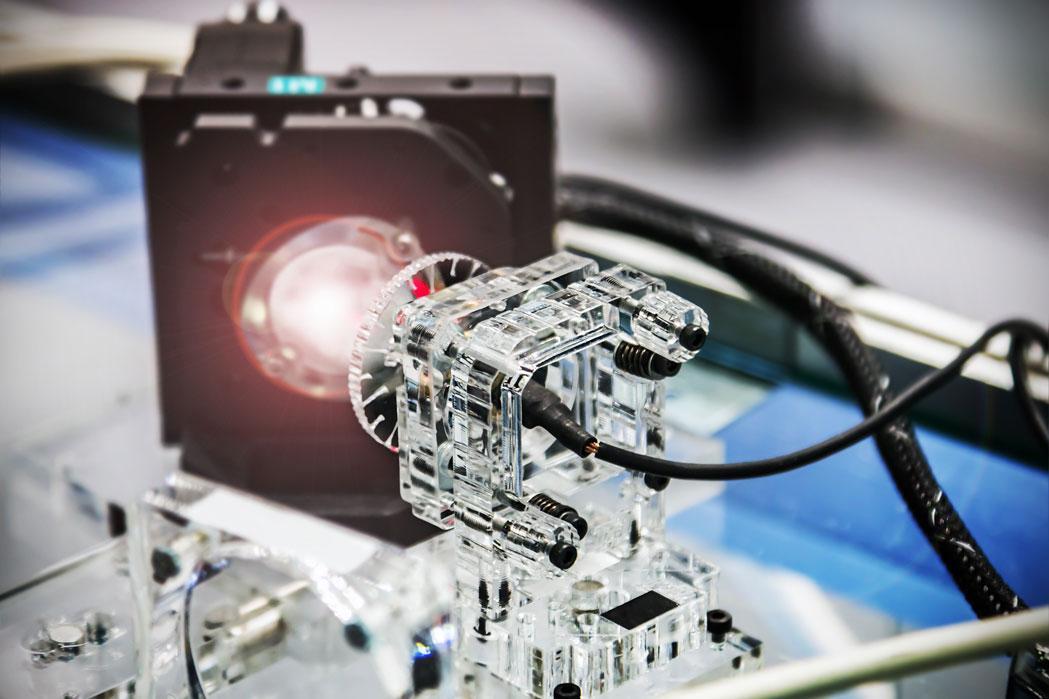
A professional OEM laser module dissipates heat through metallic heat sinks or active Peltier elements to extend the semiconductor lifespan and secure optical performance. While passive cooling is sufficient for small units, active cooling allows the laser to operate below ambient temperatures for maximum spectral control. This thermal management is vital for high resolution analytical applications where maintaining a constant temperature prevents unwanted wavelength shifts or power drops that could otherwise distort the collected spectra.
Engineering support for customized laser integration
Successful implementation of an OEM laser module requires comprehensive support from feasibility analysis to the adaptation of firmware for specific customer protocols. Close cooperation between engineers reduces technical risks and shortens the time to market while ensuring that the module integrates perfectly into the target application. RGB Lasersystems translates these complex optical requirements into market-ready products by optimizing mechanical form factors and selecting specific wavelengths for customized scientific and industrial use cases.
Ensuring quality through certified manufacturing processes
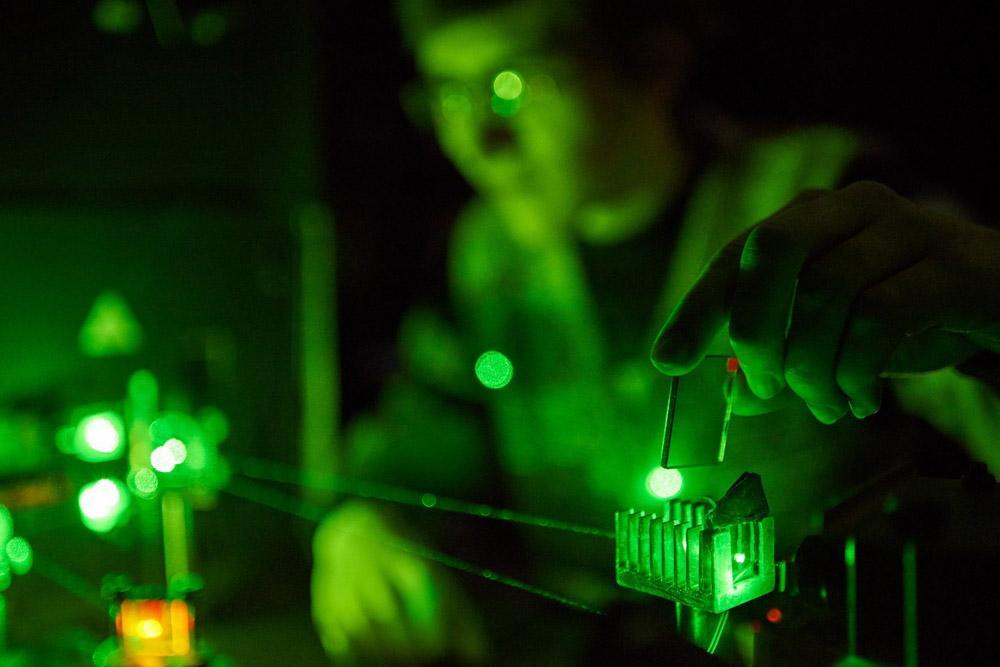
A reliable OEM laser module must be produced through certified manufacturing processes that guarantee consistent quality across thousands of units. Every system undergoes extensive final tests where optical power, wavelength stability, and electrical safety are meticulously logged. This structured approach to development and documentation ensures that the modules function reliably for their entire lifetime. Such a commitment to quality provides long term investment security for equipment manufacturers in medical and industrial sectors. Learn more about what measures we take to ensure laser modules of the highest quality in our news segments.
Request Technical Information
If you are planning a new integration project, an OEM Laser Module can be specified according to your technical requirements and system constraints. Discuss your application with our engineering team to define wavelength, output power, beam configuration and interface details. Detailed specifications, integration guidance and customization options are available upon request. Contact RGB Laser Systems to evaluate the appropriate OEM Laser Module solution for your laboratory or industrial platform and ensure reliable optical performance in your final system.